Barrie Weaver is a seasoned professional with extensive expertise in end-to-end product design..

His current mission is to

encourage young people to pursue careers in engineering.

Why does this matter?


Over the past thirty years, engineering in the UK has faded from public attention.


Recent surveys show that 76% of 19-24-year-olds know almost nothing of what engineers do.


Engineering faces a substantial staffing deficit, with a projected shortfall of 1 million engineers by 2030.

Yet, as the world faces unprecedented challenges, the need for innovative engineering solutions has never been greater.

Barrie Weaver is an experienced professional with extensive expertise in end-to-end product design and manufacturing across many engineering projects.


His current mission is to help inspire the young to pursue a career in engineering.


Why does this matter?

Over the past thirty years, engineering in the UK has faded from public attention.


Recent surveys show that 76% of 19-24-year-olds know almost nothing about what engineers do.


Engineering faces a substantial staffing deficit, with a projected shortfall of 1 million engineers by 2030.

Yet, as the world faces unprecedented challenges, the need for innovative engineering solutions has never been greater.

What caused this?


Why is action crucial?


  • Engineering's low profile?

    For several decades, there has been a trend in government and the media to value finance and service-sector professions over traditional engineering roles. 


    The visibility and perceived security of these careers have overshadowed engineering, particularly in and around London.  Ironically it is these same "secure" roles that are now under threat from AI.


    With far fewer visible role models in engineering than in other fields, it can be difficult for young people to envision themselves in those careers.

  • Huge shortage of talent.

    Today, engineering faces a significant staffing shortfall, with a projected deficit of 1 million engineers by 2030. 


    Currently, in the UK, 872,000 18-24-year-olds are not in work or training, yet each year, the engineering sector has around 46,000 unfilled positions.


    Engineering faces the biggest-ever UK skills shortfall, with 145 jobs competing for each apprentice.


    More Physics graduates are working in the finance sector than working in engineering. 


  • Why it matters to us all?

    If Britain does not prioritise engineering and technology, it risks losing its competitive edge on the international stage as other nations rapidly advance in these fields. 


    The neglect of engineering and technology is already hampering Britain's capacity to shape global developments, making it vulnerable to economic stagnation and reducing its stature as a leading nation.

  • Engineers rely on each other.

    Engineering is mutually supportive. Every engineering activity relies upon the equipment, services, and products of other engineers.


    It is the dynamics of the whole sector that keeps engineering at the sharp end of technology. 


    How then can we harness this teamwork to raise the status of the profession as a whole?

  • What about people?

    The days when our engineers created things we could all understand and value are long gone. In the UK, we no longer produce consumer goods. Today’s engineering is mainly business-to-business, meaning engineers primarily communicate with other professional engineers. 


    As a result, discussions focus on specifications, certification, technology, equipment, and facilities. These are essential for business, but the main problem with this approach is that it overlooks people. 


    How do they play a part? Why do they matter? Why do they do it? But if you want to attract people, you must talk about people.


  • Extensive research.

    Recognising that traditional engineering outreach methods have not connected with today’s youth, the team conducted extensive research on how engineering is portrayed to young people.


    Career fairs, school presentations, online recruitment materials, funding and comparisons with other sectors offered valuable insights into failings and opportunities. 


    These findings formed the basis of the circlar appoach proposal.


  • Talk on their terms.

    Weaver champions a new approach—one that communicates to teens on their terms, emphasises the human side of engineering, the social value and sparks curiosity. 


    The interactive website is linked to a fully integrated social media campaign via Instagram, Facebook, TikTok, and LinkedIn, targeting the different demographic groups – teens, students, teachers, and companies -  relevant to a circular national campaign. 

  • Cut the jargon.

    All engineering has its complexities and is highly sophisticated, but we need to set aside jargon to communicate in values that ordinary people can understand. 


    Our platform encourages companies to make that change and showcase the value of their work in helping society function. 


    Social value is a key driver in attracting young people, who nowadays want their careers to have social purpose. 

Now, more than ever, the world needs fresh minds and daring ideas.


So how do we create an emotional bond between the profession and the young?


You can't do it alone.

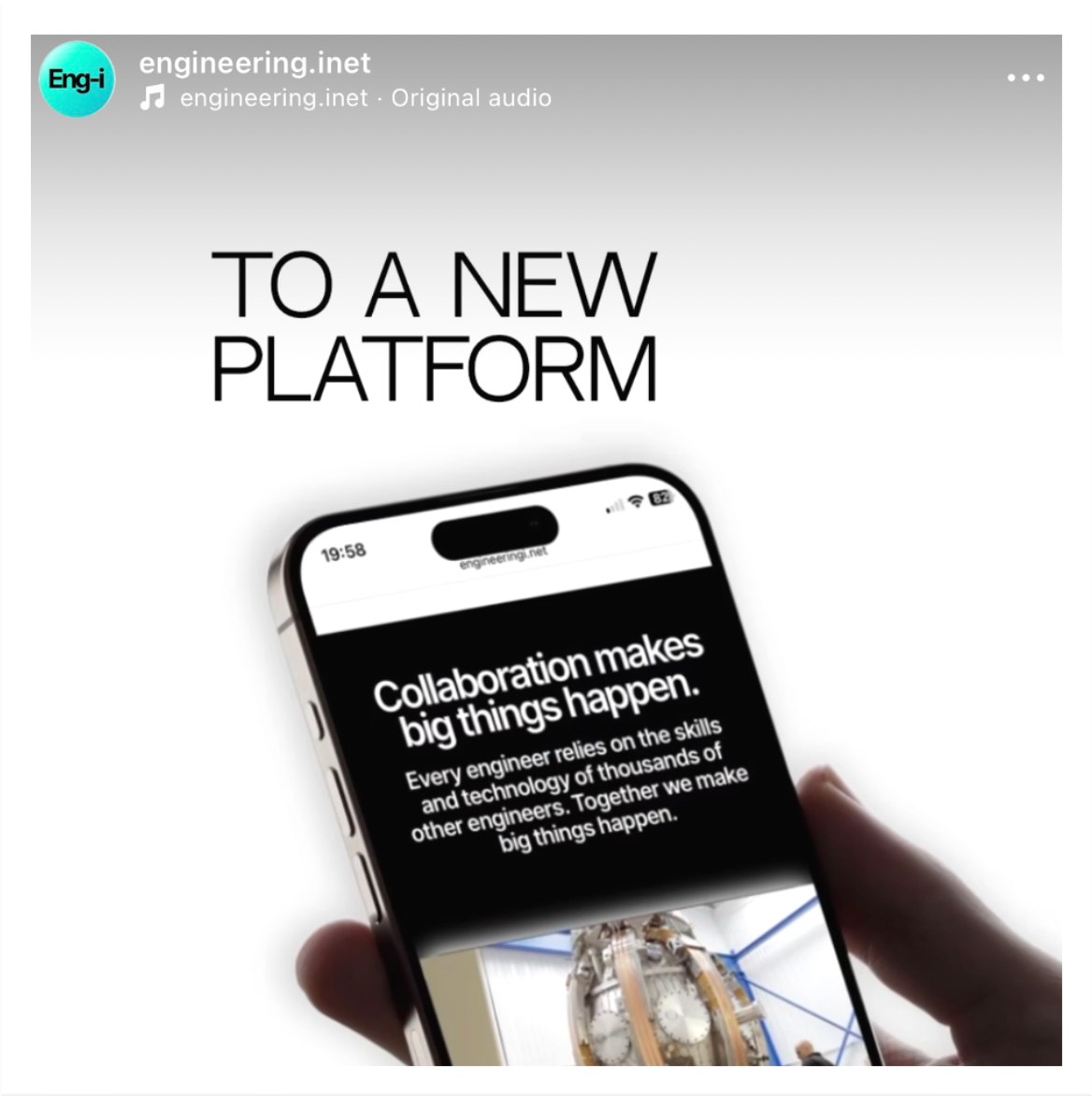
The engineering profession depends on collaboration.


Every engineer, across all disciplines, relies on the skills, products, and technologies developed by other engineers.


Bring them together, and big things happen.

Fractured community.

This mutual dependence shows the collective strength of the engineering community.


Yet despite this natural bond, the engineering sector lacks a unified voice to promote the profession.


No platform projects its value and attracts the next generation.

Bigger together.

Our platform enables engineers to create a unifying campaign that showcases the profession as a whole.


And shows the amazing variety of engineering careers.


Engineers come together to raise their profiles and demonstrate how important they are to our way of life.

Engineering-i presents an integrated strategy to address this long-standing challenge.

Here's how it works.

What sparked this interest and concern?

Having graduated with a degree in Industrial Design Engineering, Weaver founded a London-based consultancy specialising in product development.


The consultancy expanded to a team of designers, mechanical and CAD engineers, user interface specialists, architects, graphic designers, and prototype constructors.


With work spanning consumer products, household tools, furniture, office equipment, medical and drug-delivery systems, metrology devices, transport, high-tech capital equipment, and the integration of computer systems into large-scale offices such as bank dealing and satellite control rooms.

This, in turn, involved collaborating with electronics engineers, mechanical engineers, software developers, civil engineers, structural engineers, nuclear engineers, chemical engineers, and architects within client teams across Europe, the USA, and the Far East.

With such a diverse range of projects came personal insights into how important engineers are to every aspect of our lives.


Engineering is crucial for any modern society because it drives innovation and technological advancement. China, Japan, Korea and Taiwan are recent examples of how engineering has transformed their economies.


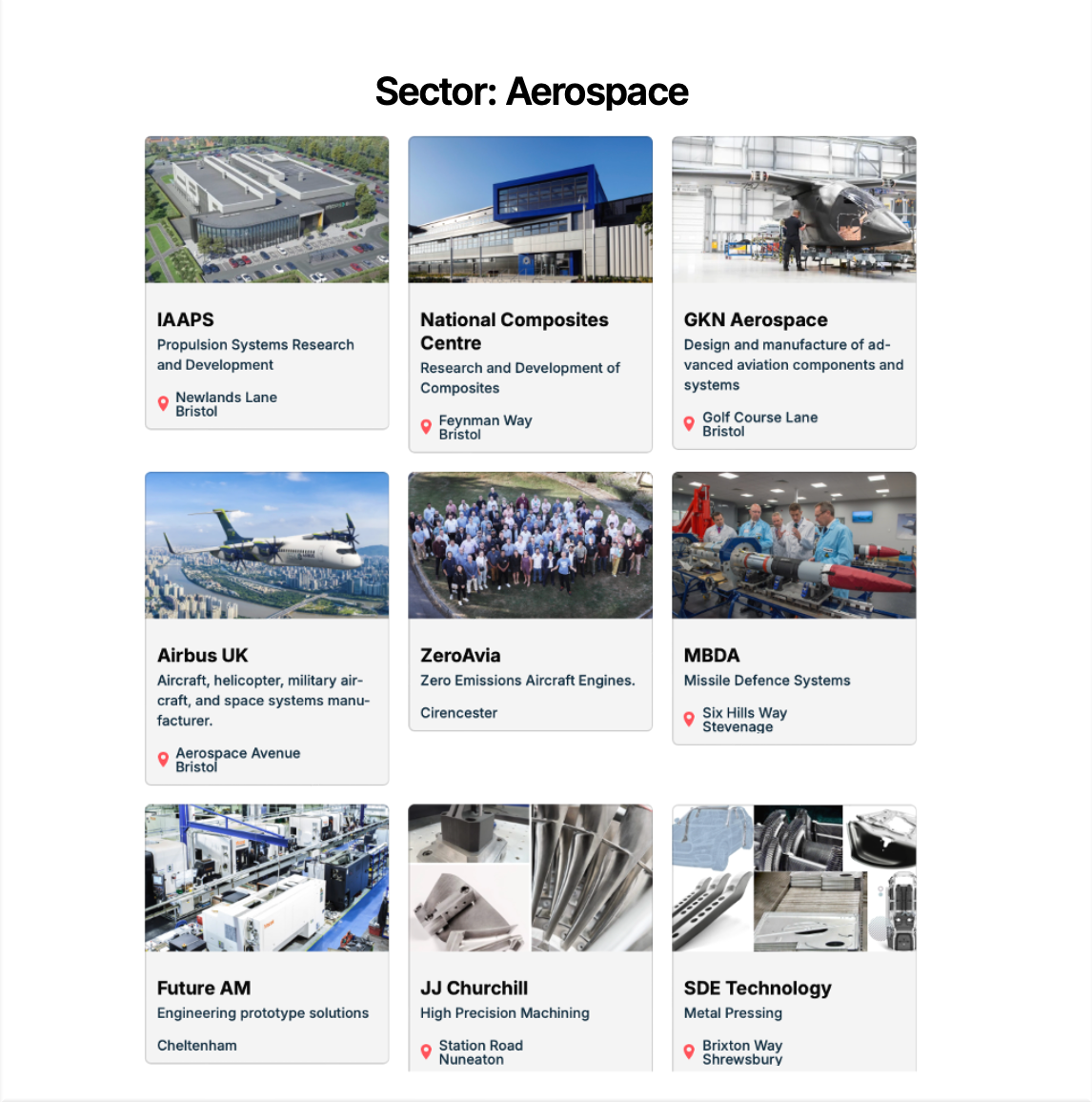
Examples

See more >